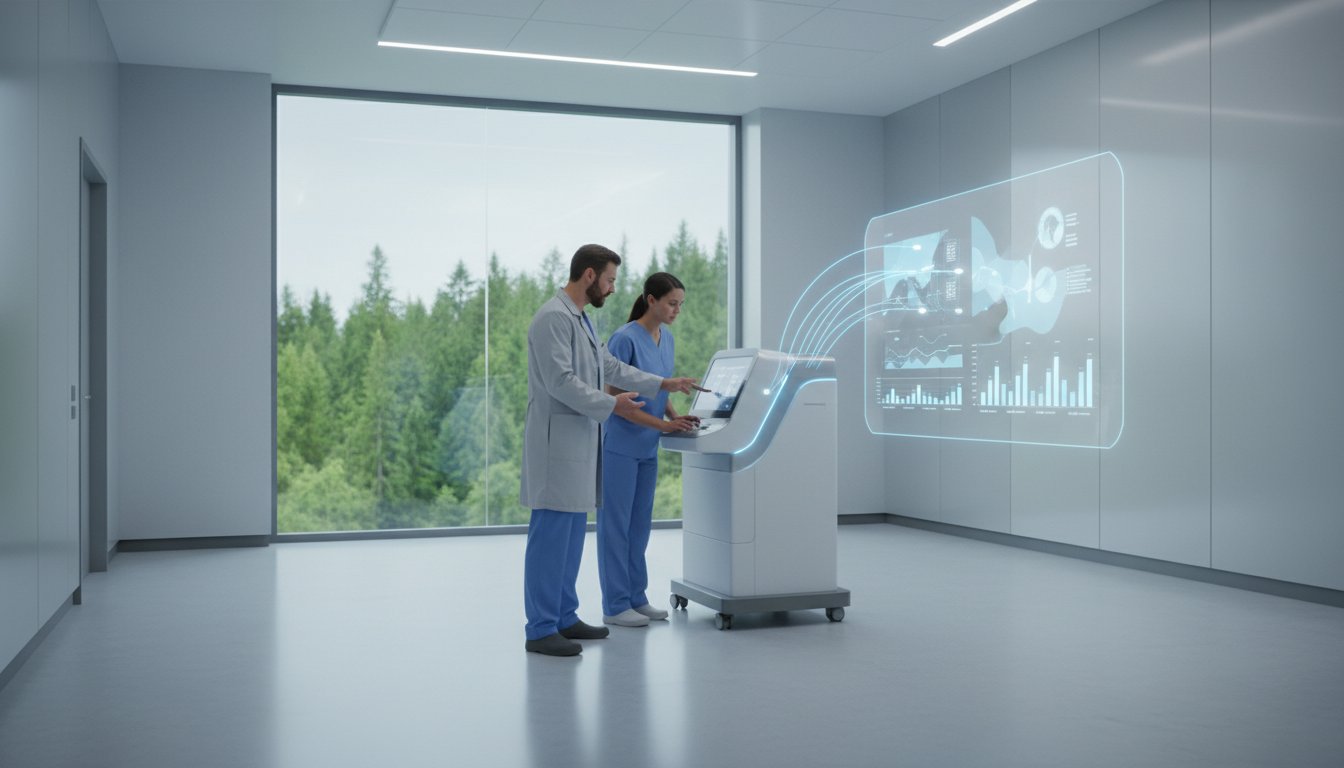
Navigate the complexities of pulmonary function testing technology with this expert guide to choosing the right PFT machine for your clinical or research facility. As diagnostic standards evolve, selecting a system that ensures accuracy, compliance, and operational uptime is more critical than ever.
Understanding the Modern PFT Test Machine: More Than Just Spirometry
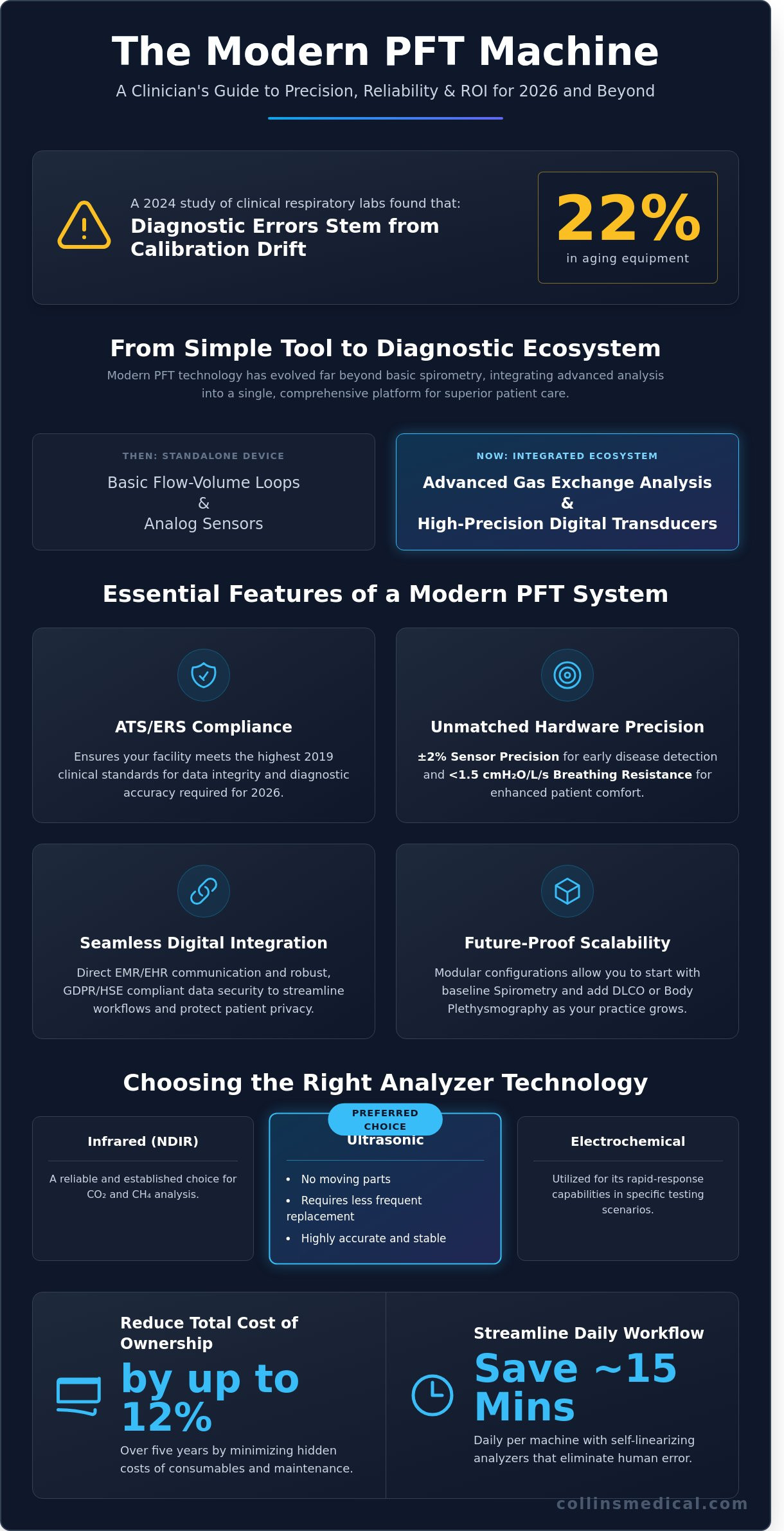
A modern Pulmonary Function Testing (PFT) machine is a comprehensive, modular diagnostic ecosystem designed to provide a complete picture of a patient’s respiratory health. It goes far beyond the basic flow-volume loops of a simple spirometer, incorporating advanced gas exchange analysis and lung volume measurements. In 2026, the role of a PFT test machine is central to diagnosing and managing conditions like COPD, asthma, and interstitial lung diseases. The industry-wide shift toward integrated software platforms makes these devices essential for efficient, data-driven healthcare, ensuring seamless communication between diagnostic equipment and electronic medical records (EMR).
The Evolution of Respiratory Diagnostics
Respiratory diagnostics have progressed significantly from early mechanical devices to today’s sophisticated systems. The clinical standards for 2026 demand an unprecedented level of diagnostic accuracy, a benchmark met by the transition from analog sensors to high-precision digital transducers. This evolution ensures that clinicians can detect subtle changes in lung function earlier and more reliably, leading to better patient management and intervention.
According to Pulmonary Function Testing (PFT), this is a well-documented area of ongoing research and practical application.
Why Quality Hardware Impacts Patient Outcomes
The precision of a PFT system’s hardware has a direct correlation with clinical outcomes. High-fidelity sensors and transducers are crucial for the early detection of respiratory diseases, allowing for timely treatment. Furthermore, well-designed, low-resistance breathing circuits reduce patient fatigue during testing, improving the quality and reliability of the data collected. Ultimately, a professional-grade pft test machine serves as the gold standard for objective respiratory assessment, providing the empirical data clinicians need to make confident decisions. Just as researchers in other scientific fields rely on Electron Optics Instruments, LLC for high-precision scanning electron microscopes, respiratory clinicians require the same level of fidelity from their diagnostic hardware.
In addition to respiratory health, proactive monitoring of the cardiovascular system is essential for comprehensive preventative care; clinicians and patients alike can discover Health Screen Test to explore specialized screenings for stroke and heart disease risk.
Essential Features to Evaluate in a PFT System
When evaluating a PFT test machine, it’s crucial to look beyond the basic specifications. A thorough comparison should include the different analyzer technologies available—such as infrared, ultrasonic, and rapid-response gas analyzers—and verify that both hardware and software are compliant with the latest ATS/ERS technical standards. You must also consider whether a modular system that can grow with your practice is more suitable than a fixed configuration. Finally, robust data security protocols and seamless EMR integration are non-negotiable to ensure HIPAA and GDPR compliance.
Self-Linearizing Analyzers: The New Standard
Automated linearization technology represents a major leap forward in PFT accuracy and efficiency. By eliminating the need for multi-point manual calibration, self-linearizing analyzers significantly reduce the potential for human error and save valuable staff time. This automation enhances clinical throughput, allowing technicians to focus more on patient coaching and less on equipment maintenance. Collins Medical prioritizes this technology in systems like the Eagle 3 to ensure consistent, reliable results with every test.
Research published by Johns Hopkins Medicine on PFTs shows that this is a well-documented area of ongoing research and practical application.
Software Interoperability and Data Management
In today’s connected healthcare environment, seamless EMR synchronization is essential. A PFT system must support standard protocols like HL7 and DICOM to ensure that test results are automatically and accurately transferred to patient records. When choosing a system, consider the data storage needs of your facility—research institutions may prefer on-premise solutions for greater control, while clinical settings might benefit from the accessibility of secure cloud-based storage. An intuitive user interface is also critical for reducing the learning curve for technicians and minimizing operational errors.
Selecting the Right Testing Modalities for Your Lab
The ideal PFT test machine is one whose capabilities align with the needs of your patient population. While most labs require the “Big Three” of PFT—Spirometry, Lung Volumes, and DLCO—some may need advanced diagnostics like Bronchial Challenge Testing or Maximum Inspiratory/Expiratory Pressure (MIP/MEP) measurements. For facilities that require precise Total Lung Capacity (TLC) measurements, a system with a plethysmograph is the gold standard. You can learn more by reading our guide to Understanding Plethysmography.
Spirometry and Flow-Volume Loops
When evaluating spirometry components, assess the device’s accuracy and repeatability across a wide range of flows. The software should provide real-time coaching cues to help patients deliver maximum effort, which is critical for obtaining valid results. Depending on your clinical workflow, you will also need to decide between portable handheld units for bedside testing and more robust desktop solutions for a dedicated respiratory lab.
Research published by ERS/ATS technical standard shows that this is a well-documented area of ongoing research and practical application.
DLCO and Lung Volume Measurement
The Diffusing Capacity of the Lungs for Carbon Monoxide (DLCO) test is a vital modality for assessing the efficiency of gas exchange across the alveolar-capillary membrane. For measuring lung volumes, facilities can choose between two primary methods: Nitrogen Washout and Body Plethysmography. While Nitrogen Washout is a simpler procedure, plethysmography is considered more accurate, especially for patients with obstructive lung disease. The choice depends on your lab’s specific clinical requirements and patient demographics.
Total Cost of Ownership: Procurement and Maintenance
A PFT machine is a significant capital investment, and its true cost extends far beyond the initial purchase price. Calculating the long-term return on investment (ROI) requires factoring in the hidden costs associated with lower-quality machines, such as frequent replacement of consumables, high calibration gas usage, and costly clinical downtime. For any high-volume lab, a comprehensive service contract is essential for protecting your investment and ensuring uninterrupted operation. For more details, review our PFT equipment maintenance guide for long-term care protocols.
The Revolution of Remote Servicing
Modern PFT systems are increasingly equipped with advanced remote diagnostic capabilities, transforming how technical support is delivered. This technology allows service engineers to troubleshoot and resolve a significant percentage of software-related issues instantly, without an on-site visit. By leveraging telemetry and remote access, facilities can drastically reduce technician fees and, most importantly, minimize the clinical downtime that impacts patient care and revenue.
Consumables and Calibration Gases
The cost-per-test is a critical metric for any lab manager. When selecting a PFT machine, evaluate the ongoing expenses for essential consumables like bacterial/viral filters, mouthpieces, and nose clips. For systems performing DLCO and lung volume tests, look for features designed to optimize calibration gas consumption. Using OEM-certified replacement parts is also crucial for maintaining the clinical validity of your results and ensuring the longevity of the equipment.
Why Collins Medical is the Trusted Choice for PFT Technology
Our legacy of innovation in respiratory health is extensive; through the pioneering work of Warren E. Collins, Inc. and subsequent versions of our company, we have been supporting advancements in the field since the 1930s. Today, the Eagle 3 PFT system embodies this commitment, combining precision-engineered hardware with a remote-first service model. We build lasting partnerships with institutions of all sizes, from small private clinics to global research hubs, to move beyond the spec sheet and deliver solutions that truly meet clinical needs.
The Eagle 3 PFT System: Precision Reimagined
The Eagle 3 is engineered for the demands of the modern respiratory lab. It features our industry-leading self-linearizing gas analyzers and a fully modular design, allowing you to configure a system that perfectly matches your workflow. Clinical case studies have shown that the Eagle 3 not only delivers exceptional accuracy but also improves overall lab efficiency and throughput. For a closer look at its capabilities, explore our technical deep dives on the Eagle 3 PFT system.
Your Global Partner in Respiratory Care
We are dedicated to providing empathetic, professional support to our partners across the United States, the United Kingdom, and beyond. Our team works with you at every stage, from initial site assessment and installation to comprehensive staff training and ongoing technical assistance. To get started, contact our specialists for a personalized consultation and quote tailored to your facility’s unique requirements.
Frequently Asked Questions
What is the difference between a spirometer and a full PFT machine?
A spirometer measures airflow and lung capacity during forced breathing maneuvers (FVC, FEV1). A full PFT test machine is a more comprehensive system that includes spirometry but adds advanced tests like lung volume measurement (e.g., via plethysmography) and diffusing capacity (DLCO) to provide a complete assessment of respiratory function.
How often should a PFT test machine be calibrated for clinical accuracy?
According to ATS/ERS standards, volume calibration using a 3-liter syringe should be performed daily. Gas analyzers for tests like DLCO also require regular calibration, though modern systems with self-linearizing analyzers have automated many of these checks to reduce manual effort and ensure constant accuracy.
Are modern PFT machines compatible with Epic and Cerner EMR systems?
Yes, most professional-grade PFT machines are designed for EMR integration and support standard communication protocols like HL7 and DICOM. This allows for seamless, automated data transfer to major EMR platforms, including Epic and Cerner, eliminating manual data entry and reducing errors.
What are the required CPT codes for pulmonary function testing in 2026?
CPT codes for PFT are specific to the procedures performed (e.g., spirometry, lung volumes, DLCO). While codes are updated periodically, common codes include the 94000 series. It is essential to consult the latest official CPT coding guidelines and payer policies for accurate billing.
Can PFT machines be serviced remotely to reduce clinic downtime?
Absolutely. Modern PFT systems, like the Collins Medical Eagle 3, are equipped with advanced remote diagnostic capabilities. This allows support technicians to securely access the system to troubleshoot software issues, analyze error logs, and perform updates, resolving many problems instantly without requiring an on-site visit.
What is the expected lifespan of a professional-grade PFT system?
With proper maintenance and regular servicing, a professional-grade PFT test machine can have a lifespan of 7 to 10 years or more. The longevity depends on the build quality, usage volume, and adherence to the manufacturer’s recommended maintenance schedule.
Do I need a body box (plethysmograph) for my respiratory lab?
A body plethysmograph is necessary if your lab needs to measure Total Lung Capacity (TLC) and Residual Volume (RV) with the highest degree of accuracy, especially for patients with moderate to severe airway obstruction. It is considered the gold standard for lung volume measurement.
Disclaimer
Collins Medical LLC and Collins Medical Ltd are associated but separate Companies and are not associated to or born from the Collins Medical Inc or Collins Medical Practice or Collins Medical Dictionary or Collins Medical Equipment Group.