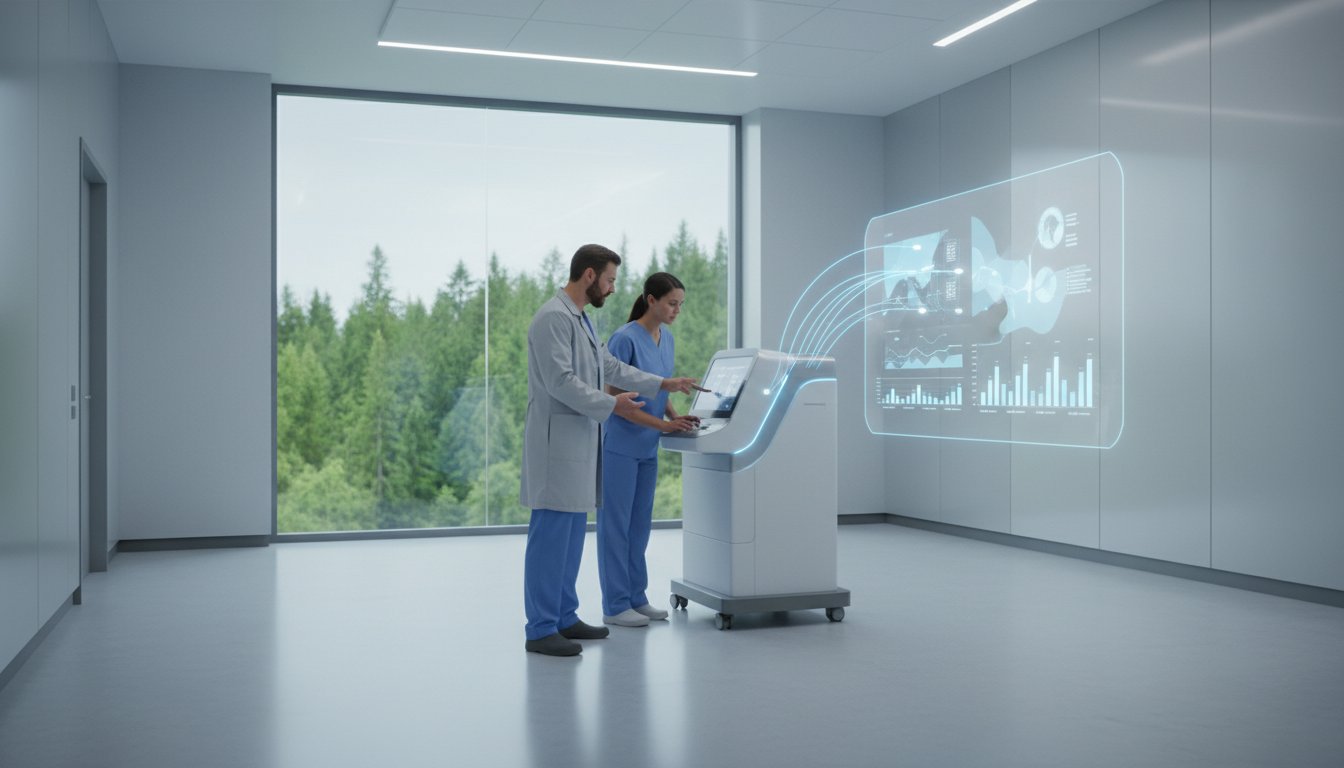
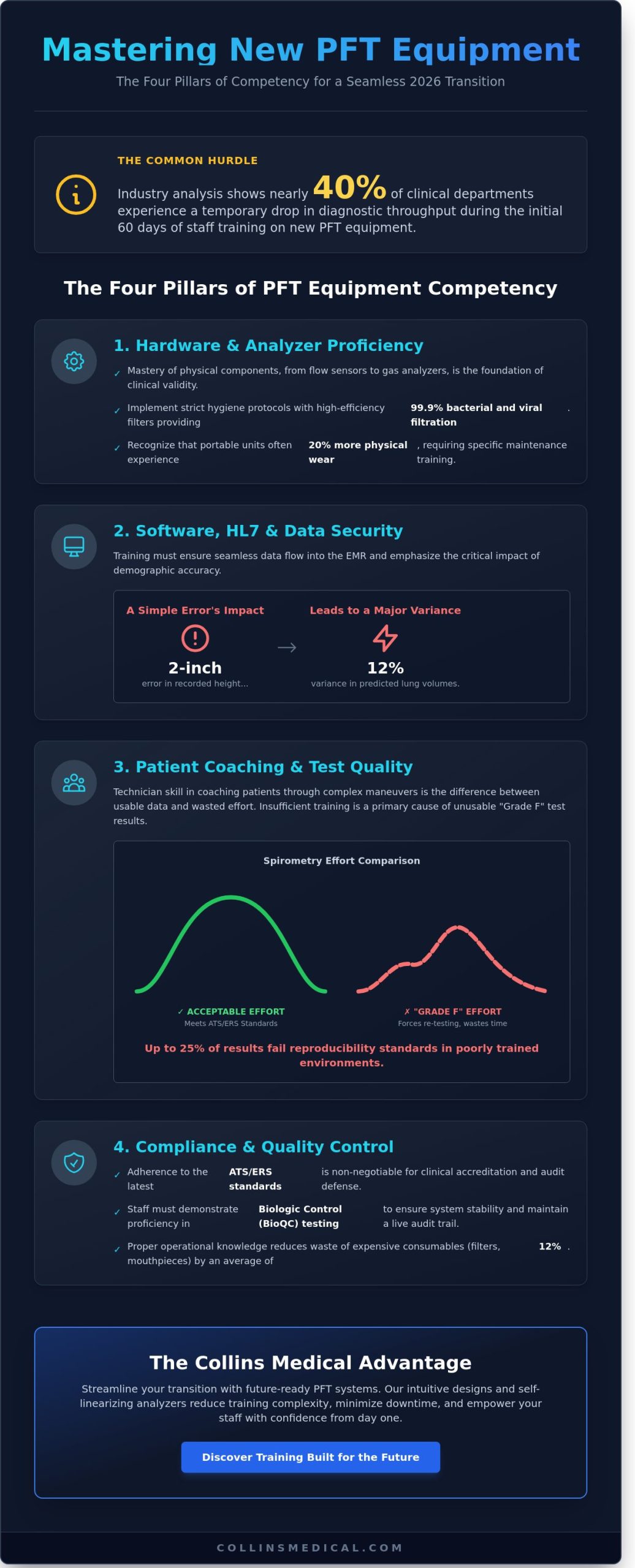
According to a 2023 industry analysis, nearly 40% of clinical departments experience a temporary drop in diagnostic throughput during the first 60 days of training staff on new pft equipment. You’ve likely felt the tension that comes with upgrading; the fear of technical errors during the learning curve is real, and staff resistance to changing established workflows can stall even the best-laid plans. It’s a common challenge for administrators in Massachusetts and Kent who are balancing the need for innovation with the demand for uninterrupted patient care.
We agree that your team’s expertise is your clinic’s greatest asset, and a hardware upgrade shouldn’t undermine their confidence. By following this 2026 guide, you’ll master the transition to new pulmonary technology using a structured framework designed for clinical accuracy and seamless EMR integration. We’ll walk through a step-by-step strategy to maintain the latest ATS/ERS standards while ensuring your staff transition to new hardware with total proficiency and minimal downtime.
Key Takeaways
- Recognize why PFT training must be treated as a continuous clinical competency to prevent ‘Grade F’ efforts and ensure the highest standards of diagnostic accuracy.
- Learn to navigate the four pillars of equipment mastery, balancing physical hardware maintenance with seamless EMR and software integration.
- Discover a structured, step-by-step timeline for training staff on new pft equipment that covers everything from site preparation to advanced spirometry maneuvers.
- Evaluate the pros and cons of traditional on-site training versus the emerging 2026 hybrid and remote servicing models to find the best fit for your facility.
- Explore how the Eagle 3 system’s intuitive design and self-linearizing analyzers set new standards for efficiency by reducing the complexity of manual calibration training.
The Strategic Importance of Training Staff on New PFT Equipment
Effective training staff on new pft equipment is no longer a checkbox exercise for clinical managers; it’s a foundational pillar of diagnostic accuracy. In 2026, pulmonary function testing (PFT) has shifted from a static laboratory task to a dynamic clinical competency. High-quality data depends entirely on the technician’s ability to coach patients through complex maneuvers. When training is insufficient, clinics often see a surge in “Grade F” efforts. These unusable results force retesting, which wastes time and compromises patient care. Industry data suggests that up to 25% of PFT results in poorly trained environments fail to meet basic reproducibility standards, leading to misdiagnosis or delayed treatment plans.
The 2026 healthcare environment demands versatility. As testing decentralizes into satellite clinics across Massachusetts and Kent, staff must be proficient across various platforms. Beyond clinical outcomes, there’s a significant financial incentive. Proper operational knowledge reduces the waste of expensive consumables, such as high-efficiency filters and disposable mouthpieces, by 12% on average. It also extends the equipment’s lifespan. Technicians who understand the delicate nature of ultrasonic flow sensors or pressure transducers prevent the accidental damage that often occurs during improper cleaning or calibration routines. Investing in comprehensive education ensures that your facility maximizes its return on investment while maintaining the gold standard of care.
Maintaining ATS/ERS Standards in 2026
Adhering to the latest American Thoracic Society (ATS) and European Respiratory Society (ERS) standards is non-negotiable for clinical accreditation. Staff must demonstrate proficiency in biologic control (BioQC) testing, where a healthy staff member performs regular tests to ensure system stability. This process provides a live audit trail for clinical inspections and ISO 15189 compliance. Modern systems, like those discussed in our history of pulmonary excellence, automate much of this documentation; however, staff still need to interpret variance data to maintain compliance. Accurate documentation is the only defense during a rigorous clinical audit.
Overcoming Staff Resistance to Technology Shifts
Moving from legacy systems to ground-breaking 2026 technology often triggers anxiety among veteran clinicians. To mitigate this, identify “internal champions” within the Ashford or Massachusetts teams to lead the transition. These early adopters help peers see that user-friendly interfaces actually reduce their daily workload. When training staff on new pft equipment, emphasize how automated quality grading and real-time feedback loops eliminate the stress of manual interpretation. This shift transforms the technician from a simple data collector into a confident, highly skilled clinical partner.
The Four Pillars of PFT Equipment Competency
Effective training staff on new pft equipment demands more than a cursory manual review. It requires a structured framework that moves beyond basic operation. Clinical excellence depends on a technician’s ability to synthesize hardware mechanics with digital data management. By 2026, the standard for pulmonary diagnostics has shifted toward integrated systems that demand a higher level of technical literacy. This section breaks down the essential competencies required for modern respiratory labs in the United States and the United Kingdom.
Hardware and Analyzer Proficiency
Staff must master the physical components of the system, from flow sensors to gas analyzers. Daily calibration checks aren’t optional; they’re the foundation of clinical validity. Modern systems often feature self-linearizing analyzers that automatically adjust for drift, yet technicians must still verify these results against biological controls. Hygiene protocols are equally critical. High-efficiency PFT filters must provide at least 99.9% bacterial and viral filtration to meet current safety standards. Technicians should also be trained to inspect mobile configurations for mechanical fatigue, as portable units often experience 20% more physical wear than stationary lab fixtures.
Software, HL7, and Data Security
The digital interface is where clinical data becomes a diagnostic report. Training must emphasize the impact of demographic accuracy. For instance, a simple 2-inch error in recorded height can lead to a 12% variance in predicted lung volumes. Mastering the HL7 upgrade path ensures that test results flow seamlessly into the hospital EMR, reducing manual entry errors. Security is paramount for both our Massachusetts and Kent-based partners. All staff should be fluent in HIPAA-compliant storage and the latest encryption protocols for remote diagnostic access. Understanding these systems helps maintain a legacy of pulmonary excellence within the facility.
The Human Element: Advanced Patient Coaching
Technology cannot replace the art of coaching. Technicians must learn to identify sub-maximal efforts by analyzing real-time flow-volume loops during the maneuver. A common sign of poor effort is a rounded peak expiratory flow or a cough artifact in the first second of the test. Modern software provides visual incentives, such as digital candles or popping balloons, which have been shown to improve patient compliance by up to 25% in pediatric and geriatric populations. Training staff on new pft equipment involves teaching them how to use these tools to elicit the maximal effort necessary for an accurate diagnosis.
Troubleshooting and Calibration
Identifying errors before they reach the physician’s desk is the final pillar. Technicians must recognize atmospheric pressure shifts or gas concentration discrepancies that could invalidate a DLCO test. Rapid troubleshooting prevents downtime and ensures the lab maintains its throughput targets without sacrificing precision. In high-volume clinics, catching a calibration drift early can save up to three hours of re-testing per week.
Comparing Training Models: On-Site, Remote, and Hybrid
Clinical managers in 2026 must weigh the logistical costs of traditional manufacturer-led sessions against the agility of virtual platforms. On-site training remains the gold standard for tactile feedback, especially for complex maneuvers like body plethysmography. However, a 2024 industry survey showed that 62% of clinical leads view scheduling conflicts as the main barrier to on-site success. Training staff on new pft equipment effectively now requires a hybrid approach that combines physical demonstrations with digital scalability to ensure long-term retention.
The ‘Train the Trainer’ model has emerged as the most cost-effective framework for large-scale institutions. By certifying a small group of internal experts, hospitals create a sustainable cycle of peer-to-peer education. This reduces reliance on external vendors for every new hire and ensures that expertise stays within the clinic. It’s a strategy that protects the initial investment while maintaining the high standards of pulmonary excellence expected in modern diagnostics.
The Power of Remote Servicing and Support
Remote troubleshooting capabilities now act as real-time, ‘just-in-time’ training for respiratory therapists. When a technician hits a software snag, screen-sharing allows specialists to guide them through the resolution on the live interface. This immediate intervention cuts clinical downtime by up to 40% compared to traditional service calls. Expert support teams based in Ashford and Hopedale provide this technical oversight, ensuring that software navigation and HL7 integration remain seamless. Clinics don’t have to wait for a field engineer when a virtual expert can resolve calibration issues in minutes.
Simulation-Based Learning vs. Live Patient Practice
Modern software includes ‘test patient’ profiles that let staff practice maneuvers without affecting clinical databases. Using these sandboxes is essential when training staff on new pft equipment because it allows for mistakes in a zero-risk environment. Staff members should also perform tests on each other to understand the physical demands placed on the patient. This builds the coaching skills necessary for high-quality results. Before moving to live patients, every technician must clear a competency checklist. This includes five successful simulated tests and a verified understanding of the latest ATS/ERS standards.
A Step-by-Step Implementation Timeline for Your Team
Successful implementation of the Eagle 3 range depends on a structured, phased rollout. Effective training staff on new pft equipment requires a 90-day roadmap to ensure clinical accuracy and operational efficiency in your Ashford or Massachusetts facility. This timeline prevents information overload while establishing high standards for data integrity from day one.
Two weeks before the hardware arrives, your IT team must verify HL7 compatibility and ensure the designated testing space meets the necessary ventilation and electrical requirements. Once the equipment is on-site, the schedule moves rapidly. During the first week, clinicians should focus on mastering the user interface before moving to complex diagnostic maneuvers. By the 30-day mark, 95% of staff should be able to operate the system without external technical support.
- Week 1: Transition to advanced DLCO and Lung Volume testing while finalizing EMR integration.
- Month 1: Conduct the first proficiency audit to identify workflow bottlenecks.
- Quarterly: Schedule 30-minute briefings for software updates and technique refreshers to maintain the gold standard of pulmonary excellence.
The First 48 Hours: Critical Orientation
The initial 48 hours are about building confidence with the Eagle 3 power-on sequence and daily calibration routines. Every staff member must demonstrate they can perform a basic FVC test that meets 2019 ATS/ERS standards for repeatability. We prioritize the hygiene and filter-replacement workflow immediately; 100% compliance with infection control protocols is non-negotiable for patient safety. It’s essential that technicians understand the “ready-to-test” indicators to avoid unnecessary delays during high-volume clinics.
Measuring Success: The Proficiency Audit
Long-term success is measured through concrete KPIs rather than subjective comfort levels. We set specific targets for staff, including a requirement that 90% of tests achieve an ‘A’ or ‘B’ quality grade from the software’s automated feedback system. If a technician’s error rate exceeds 15% during the first month, they receive targeted one-on-one coaching. We also create a formal feedback loop where staff report workflow “pain points,” such as EMR lag or hardware positioning issues. This data allows management to refine the process and maintain the high precision expected of modern respiratory labs.
Ready to elevate your clinical standards with the latest in respiratory technology? Explore our legacy of pulmonary innovation today.
The Collins Medical Advantage: Training Built for the Future
Collins Medical has defined the gold standard in respiratory technology since the 1930s. Moving to the Eagle 3 PFT system isn’t just a hardware upgrade; it’s an investment in a platform engineered to minimize operational friction. When training staff on new pft equipment, the primary hurdle is often the complexity of calibration and diagnostic validation. We’ve eliminated these barriers through intelligent automation.
Our self-linearizing analyzers represent a revolutionary shift in clinical workflow. Traditional systems often require intensive manual calibration training that can take weeks for a technician to master fully. The Eagle 3 automates this process, maintaining unparalleled precision without the steep learning curve. This allows your team to focus on patient care rather than troubleshooting hardware settings.
Eagle 3: Designed for Rapid Staff Adoption
The Eagle 3 utilizes a ground-breaking “Auto Diagnostics” feature that serves as a real-time mentor for your team. It identifies valid tests instantly, helping newer technicians feel confident in the data they collect. This feature significantly reduces the need for constant oversight by senior clinicians, which is vital in high-volume environments. Mobile configuration options further adapt the system to your specific clinic layout. Whether you’re moving between exam rooms or operating in a fixed lab, the interface remains consistent and intuitive. Discover our legacy of pulmonary excellence and see how we’ve evolved over nine decades to meet modern clinical needs.
World-Class Technical Support as a Training Extension
Mastery shouldn’t end after the initial setup. We provide an ongoing safety net through our expert support teams located in Ashford, Kent, and Hopedale, Massachusetts. These specialists understand the technical nuances of training staff on new pft equipment and offer remote servicing capabilities that act as a digital safety net. If a staff member hits a roadblock, our team can dial in to troubleshoot or provide guidance in real time. This accessibility transforms technical support into a continuous learning tool for your facility.
Our commitment to accuracy and precision ensures your facility delivers fast, reliable results every time. Service contracts with Collins Medical simplify long-term staff mastery by providing regular software updates and expert-led refreshers. We’ve built our reputation on being a dedicated B2B partner. We ensure your team remains at the cutting edge of respiratory care while minimizing total lifecycle costs for your organization.
Mastering Modern Pulmonary Diagnostics
Success in respiratory care depends on more than just hardware. It requires a structured approach to the four pillars of competency and a clear implementation timeline. Transitioning to updated systems doesn’t have to be a burden on your clinical workflow. When you prioritize training staff on new pft equipment, you’re investing in the long-term accuracy and efficiency of your lab. Collins Medical has been at the forefront of this field since the 1930s, providing the expertise needed to navigate these technological shifts.
Modern solutions like the Eagle 3 range incorporate self-linearizing analyzers that provide unparalleled precision without the need for constant manual calibration. Our remote servicing capabilities are designed to minimize downtime, keeping your facility operational when patients need you most. Whether you operate in Massachusetts or Kent, these tools ensure your team remains at the cutting edge of clinical excellence. It’s time to move away from legacy hurdles and embrace a streamlined diagnostic environment.
Experience the Future of PFT: Schedule an Eagle 3 Demo Today
Your team’s proficiency is the foundation of better patient outcomes, and we’re ready to help you strengthen it.
Frequently Asked Questions
How long does it typically take to train a medical assistant on new PFT equipment?
Training a medical assistant typically requires 16 to 24 hours of focused instruction over a 3-day period. This timeframe allows for 10 supervised calibration cycles and 20 practice maneuvers with live subjects. Technicians generally reach full clinical competency after performing 50 tests under the supervision of a lead physiologist. It’s essential to document these sessions to meet local accreditation requirements in Massachusetts or Kent.
Does the staff need special certification to perform pulmonary function tests?
While US federal law doesn’t mandate specific certification, 90% of reputable labs require a NIOSH-approved spirometry certificate. In the UK, the ARTP professional registry provides the benchmark for clinical excellence. Staff without these credentials often see a 15% higher rate of technical errors during the first six months. Most administrators find that certified staff produce more reliable data for physician interpretation and overall patient care.
How do we ensure data accuracy when switching from an old PFT machine to a new one?
Clinics ensure accuracy by conducting a biological control program and daily 3-liter syringe checks. Training staff on new pft equipment involves running 10 parallel tests comparing the legacy device with the new system. If variances exceed 3%, technicians must re-calibrate the hardware to align with ATS/ERS 2019 precision standards. This rigorous process ensures that longitudinal patient data remains consistent during the transition between different technologies.
What are the most common mistakes staff make when learning new PFT software?
The most frequent errors involve incorrect entry of ambient temperature and humidity levels into the software. Nearly 45% of training hurdles stem from technicians ignoring real-time quality prompts during the expiratory phase. Staff also frequently forget to update the patient’s height and weight, which alters predicted values by as much as 20%. Mastering these software inputs is vital for maintaining the high standards expected in modern respiratory clinics.
Can PFT training be done entirely remotely, or is on-site required?
PFT training can occur entirely through remote digital platforms, though a hybrid approach is often more effective. Approximately 70% of software navigation is taught via secure screen-sharing sessions. We recommend at least 6 hours of on-site instruction to master physical sensor maintenance and direct patient coaching techniques. This hands-on time ensures that staff can troubleshoot hardware issues without waiting for external support, which improves overall clinic uptime.
How often should staff undergo refresher training for PFT equipment?
Staff should undergo a formal refresher course every 12 months to maintain clinical standards. Annual training reduces the frequency of poor-quality test grades by 35% compared to labs with no recurring education. These sessions ensure the team remains updated on the latest software patches and evolving respiratory care guidelines. Regular reviews prevent the development of technician drift, where small procedural errors become habitual over a long period.
What role does EMR integration play in the staff training process?
EMR integration acts as a safeguard that eliminates manual data entry for 100% of patient demographics. Training staff on new pft equipment must include HL7 workflow protocols to ensure results sync instantly with patient records. This automation saves an average of 8 minutes per test and prevents critical transcription errors. When staff understand the bi-directional interface, they can focus more on patient comfort rather than navigating complex data fields.
Disclaimer
Collins Medical LLC and Collins Medical Ltd are associated but separate Companies and are not associated to or born from the Collins Medical Inc or Collins Medical Practice or Collins Medical Dictionary or Collins Medical Equipment Group.